About 1 in 7 new parents face postpartum depression (PPD). This shows how common it is and how it changes families and roles in parenting. The American Academy of Pediatrics found that it can cause big emotional and behavior problems. Not just for mothers, but fathers and kids too. Around 20-40% of moms and some dads can get PPD. This can lead to issues like weak bonds, tough relationships, and poor care for kids.
It’s crucial to know how PPD affects families. Untreated, it can last many months and impact both caregivers. This shows why we need to find and treat it fast. For more on the bad effects of not treating it, click here: early detection and treatment. Knowing the signs and impacts can help start important talks and steps to help families.
Key Takeaways
- Postpartum depression affects about 15% of new parents, significantly influencing family dynamics.
- Research shows that untreated PPD can last several months, impacting both mothers and fathers.
- Emotional and behavioral outcomes for children can suffer due to untreated maternal depression.
- A broad range of risk factors, including family history and relationship issues, can contribute to PPD.
- Early identification of postpartum depression is crucial for healthy family interactions and parenting practices.
Understanding Postpartum Depression
Postpartum depression (PPD) affects up to 1 in 7 women after giving birth. This is about 15% of new moms. PPD is more serious than the “baby blues,” which are mild and short-lived. Unlike baby blues, PPD can start at any time during the first year after childbirth. It may last for months without treatment.
Early intervention is key, as raising awareness of postpartum depression shows. About half of the women with PPD have never had it before. But, those who’ve experienced it once are more likely to face it again. Symptoms like severe mood swings, anxiety, and fatigue can take over. It’s important to recognize these feelings and ask for help.
Several factors can lead to PPD. A history of depression, abuse, high stress, pregnancy issues, smoking, and drug use are risks. Hormones and genes also play a big role in causing PPD.
Screening for depression during and after pregnancy is crucial. The U.S. Preventive Services Task Force urges doctors to check on all moms’ mental health. Knowing the signs and effects of PPD helps women get the help they need. This boosts postpartum depression awareness.
How Postpartum Depression Impacts Parenting and Family Life
Postpartum depression (PPD) brings big challenges to parenting and family life. It’s vital to understand how it affects a mom’s bond with her baby. This condition changes a mom’s emotional world, making it hard to connect with her child. Studies show that one in eight new moms face PPD within a year after giving birth.
Knowing about PPD’s impact on babies during key growth stages is essential. This knowledge helps in making strong support systems. It aims to improve the bond between mothers and their children.
Effects on Maternal Interactions with Infants
Moms with postpartum depression might not respond as warmly or quickly to their babies. This can lead to problems in how the baby attaches to them. Emotional and social growth in kids depends on constant love and communication.
Because of the depression, moms might seem irritable when they’re with their children. This can make bonding harder. Since PPD often starts in the first month after birth, getting help early is key to building healthy relationships.
Paternal Postpartum Depression Recognition
It’s important not to ignore depression in new dads, as it affects the whole family. Studies show that dads can get depressed when moms have PPD. This increases the risk of kids facing emotional and behavioral issues.
Unlike moms, dads might show their depression through anger instead of sadness. This makes it harder to notice when dads are struggling. By understanding father’s postpartum depression, families can get better support. This ensures that everyone gets the help they need during this time.
Postpartum Depression Effects on Family Dynamics
PPD affects not just the person dealing with it but the whole family. When one parent suffers from postpartum depression, it impacts the other’s emotional health. The maternal and paternal PPD connection creates a cycle. This can make the home life tense and filled with misunderstandings, hurting everyone’s wellness.
Connection Between Maternal and Paternal PPD
A concerning trend shows that when one parent has PPD, the other’s risk increases. Mothers with PPD might make the home feel chaotic, raising stress for both. Fathers might feel frustrated, scared, angry, or alone. This can lead to less talking and more problems within the family.
If a mother’s PPD goes untreated, it could last long after the baby is born. It affects how parents get along and can hurt the child’s growth socially, emotionally, and in thinking. The situation at home might get shaky, making it hard for the mother and child to bond well. This shows how crucial it is to have good treatments and support for both parents.
| Parental Member | Emotional Impact | Potential Risks |
|---|---|---|
| Mother | Feelings of hopelessness, mood swings, guilt | Bonding impairments, chaotic household |
| Father | Frustration, isolation, anger | Relationship strain, increased risk of depression |
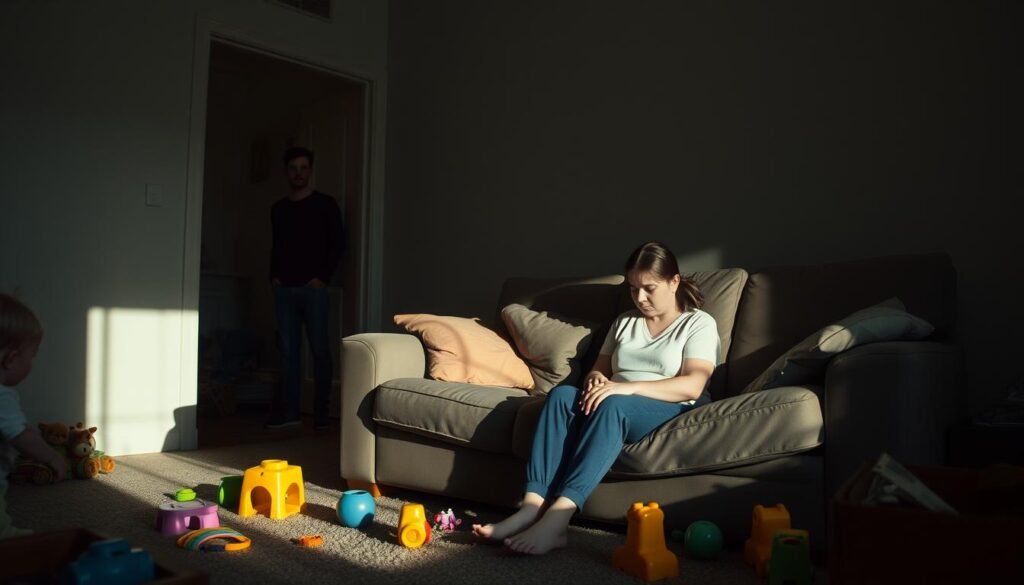
Parenting Challenges Postpartum Depression
Parenting with postpartum depression (PPD) can be tough for new families. It affects 20% to 40% of moms. This leads to trouble with emotional support and care routines. It makes bonding with the baby harder.
Many moms with PPD struggle with breastfeeding. They often feel unhappy, which may cause them to stop breastfeeding early. This can hurt both mom and baby’s health. So, it’s important to tackle these parenting challenges.
Fathers might also withdraw if they feel depressed. They may spend less time reading or playing with their infants. This lack of play can slow a child’s learning and social skills. Kids may face more problems if both parents have depression, especially if dad is really involved.
If parents are depressed, their children could run into problems. Kids of moms with severe PPD are more likely to do poorly in math. They’re also at higher risk of getting depressed by 18. These facts show how deeply PPD affects families.
To get through this, families need to spot the signs early and talk to doctors. Help is available to beat these challenges. Talking openly can make parenting with PPD easier. This helps both kids and parents.

Learning about postpartum depression and its effects is key. It leads to better handling of these challenges. This creates a caring environment for kids and families.
Emotional and Behavioral Health Outcomes in Children
Children with parents facing postpartum depression (PPD) are at risk of emotional issues. These issues can affect their behavior and development. For instance, they may face cognitive delays and struggle with social skills.
One study with 657 children showed a link between maternal depression and caregiving. When mothers are depressed, the care they give can suffer. This can lead to kids having trouble controlling their emotions. But, loving and supportive care can reduce these negative effects.
Screen time also impacts children negatively, especially those with a parent experiencing PPD. High screen time worsens the effects of PPD. Despite this, positive actions like reading together can improve language skills in children.

Statistics are worrying. Kids of depressed moms are much more likely to have delayed emotional and language development. They also struggle with skills like self-regulation and flexibility in thinking.
Understanding maternal mental health is key to helping these children. Supportive parenting is vital. It can dramatically improve a child’s emotional and behavioral growth, despite the challenges of PPD.
Coping with Postpartum Depression as a Parent
Dealing with postpartum depression (PPD) is a crucial journey that takes understanding, help, and good strategies. This issue hits many new moms hard, with about 1 in 7 struggling with PPD. To recover, building a support system is key.
Developing a Support System
Reaching out to family, friends, and groups is vital in dealing with PPD. It feels better to share your story with people who get it. Talking about mental health helps everyone feel less alone.
Joining support groups or community programs helps fight loneliness. It lets parents meet others who are in the same boat. Sadly, 40 percent of U.S. kids don’t have close bonds with their parents. So, it’s crucial for moms and their kids to connect.
Support groups can boost your physical health, too. For instance, classes encouraging skin-to-skin touch can make babies sleep better and their brains grow.
Coping Strategies for Parents
Fighting postpartum depression calls for good coping methods. These can be professional counseling, exercise, and mindfulness. Working out is especially good for shaking off PPD symptoms and improving your mood. Taking care of yourself is important. Spend time outside. Sunlight and fresh air can make you feel happier.
Having a daily schedule can bring stability and make stress easier to handle.
- Professional therapy and counseling
- Regular physical exercise
- Mindfulness and meditation practices
- Community resources and parenting classes
- Quality skin-to-skin contact with the baby
Handling PPD well helps parents feel better and bonds them closer to their kids. Baby massages, for example, are great for both moms and babies. It’s critical to seek help early since ignoring PPD can affect the whole family for years.
Professional resources can provide valuable guidanceon dealing with postpartum depression’s challenges.
Support for Postpartum Depression Sufferers
Support for postpartum depression sufferers is vital during big life changes. Family and friends are key in offering a supportive environment. Talking openly about mental health can reduce feelings of being alone. This communication helps everyone understand and show more kindness.
Healthcare providers have different treatment options based on individual needs. Therapy and medicine can help manage the symptoms. They aid in regaining emotional stability. Postpartum Support International offers great resources and support groups. Here, mothers can meet others who are going through the same thing.
There are also mental health resources like the Maternal Mental Health program at Huntsman Mental Health Institute. They have drop-in support groups for new and expecting moms. These groups are places to share stories and ways to deal with postpartum depression.
It’s important to know postpartum depression is common, so asking for help matters. Up to 41.49% of women might have mild depression symptoms. While 23.13% could face severe ones. Recognizing the need for support is a big step. It encourages individuals to get help and actively care for their mental health.
Resources for Families Facing Postpartum Depression
Families dealing with postpartum depression can find lots of support. Groups like postpartum depression resources for families are key. Postpartum Support International offers online groups and resources by state. They aim to build a supportive community for these parents.
Local mental health services are also important. They screen for PPD and provide early help. This support helps families understand and handle postpartum depression better. They learn they’re not alone in this.
The PPD support organizations like the National Maternal Mental Health Hotline are crucial too. They offer immediate help and info on treatments. Not all treatments involve medication, which is important for some.
| Resource Type | Organization | Contact Information |
|---|---|---|
| Support Group | Postpartum Support International | 1-800-944-4773 |
| Hotline | National Maternal Mental Health Hotline | 1-833-943-5746 |
| Screening | Local Mental Health Services | Varies by location |
Using these resources can greatly improve mental health for parents and infants. Families must know it’s okay to seek help. There are many resources available to support them through this time.
Conclusion
Postpartum depression (PPD) deeply affects family dynamics and parenting. It causes emotional struggles for moms, dads, and kids. About 12% of women face depression each year, and it’s even more common among those with less income. Knowing more about PPD helps families deal with its challenges better.
Raising awareness about postpartum depression is crucial. It helps build stronger support systems for families in need. Data shows 52% of moms in Early Head Start have signs of depression. This highlights how important community and resources are. By focusing on mental health, we can help stop emotional issues in kids linked to PPD.
We need to take serious steps to fight postpartum depression. Acknowledging its effects and getting help leads to stronger families. Early help and community backing are key. They improve the health and happiness of families dealing with PPD.