About 80 percent of people with severe major depression get much better with Electroconvulsive Therapy (ECT). ECT has been a key mental health treatment since 1938. It helps when medications and therapy don’t work.
This guide covers everything about ECT. It looks at how it works, what to expect, and how to get ready for it. If you’re dealing with hard-to-treat depression, ECT could be a ray of hope. For more on ECT’s science, check out this article.
Key Takeaways
- ECT is very effective for severe depression, even when other treatments don’t help.
- Typically, 6 to 12 sessions are needed, happening two to three times a week.
- Most insurance plans cover some of the cost of ECT.
- Though confusion and memory loss can occur, they usually get better over time.
- ECT works well for treatment-resistant depression and serious mental health crises.
What is Shock Therapy for Depression?
Shock therapy for depression, also called Electroconvulsive Therapy (ECT), is mostly for those with severe depression. It helps people who haven’t seen improvement with usual treatments. By applying electric currents, it stimulates the brain. This can greatly reduce symptoms of depression.
This treatment leads to quick positive changes in mood and well-being. Even if it sounds scary, many find it greatly helpful. In fact, 70 to 90% of people feel much better after ECT. This shows why it’s important for treating hard-to-beat depression.
If you’re struggling with severe depression, getting professional help is key. Making an informed choice about treatments like ECT can really help. Knowing about your condition, spotting the signs, and looking into treatments like ECT can improve recovery. Also, catching depression early is crucial. For more help and tips, check this resource.
Understanding Electroconvulsive Therapy (ECT)
Electroconvulsive therapy (ECT) is a big step forward in treating depression, especially when other methods haven’t worked. It uses controlled shocks to the brain to quickly ease symptoms of depression. Knowing how it works and looking at other options is key for people thinking about this treatment.
How ECT Works
ECT works by sending small electrical currents through the brain. This causes a controlled seizure. Changing the brain’s chemistry in this way can quickly improve symptoms of severe depression.
Many patients feel better after just a few treatments. This makes ECT a faster option than many antidepressants, which often take weeks to start working. It’s done in a hospital to ensure safety and effectiveness.
ECT and Other Treatment Options
Though ECT is highly effective for severe depression, there are other brain stimulation treatments worth considering. These include Transcranial Magnetic Stimulation (TMS) and Vagus Nerve Stimulation (VNS). Each offers different benefits:
- Transcranial Magnetic Stimulation (TMS): This method uses magnets to activate nerve cells in the brain, focusing on areas that control mood.
- Vagus Nerve Stimulation (VNS): It sends electrical signals to the vagus nerve. This can affect mood and have lasting effects.
Choosing the right treatment depends on the person’s needs, as ECT isn’t for everyone. Talking to a healthcare provider is vital to find the best plan for treating depression.
Effectiveness of ECT in Treating Severe Depression
Electroconvulsive Therapy (ECT) is a top choice for severe depression, especially when other treatments haven’t worked. Many studies confirm ECT’s success, with about 68% of patients seeing big improvements. Compared to other options, ECT often works better.
Statistics on Treatment Success
ECT is particularly effective for those who don’t get better with standard antidepressants. Those with severe depression find little help from a third antidepressant. But, ECT offers them a real chance for relief. In fact, fewer than 1% feel worse after ECT, as per research from 2018-2019. This shows ECT is both safe and effective.
When to Consider ECT
Choosing ECT is a big decision. It’s often the best path for those who’ve tried other treatments without success. It’s ideal for urgent cases, like when there’s a risk of suicide. Major psychiatric groups often recommend it when quick action is needed.
To learn more about how ECT helps with depression, check out more info on the effectiveness of ECT.
The ECT Procedure: What to Expect

The ECT procedure, known as electroconvulsive therapy, aims to be quick and easy for patients. Each session lasts about 5 to 10 minutes. Patients are in the treatment area for around 15 to 20 minutes. Before the therapy starts, patients undergo medical checks and get ready for anesthesia. They receive general anesthesia and muscle relaxants, so they feel nothing during the session.
Most people have 8 to 12 sessions to get the best results for serious depression. These treatments are usually three times a week. They are often set for Mondays, Wednesdays, and Fridays. After treatment, patients rest in a recovery room for about 20 to 25 minutes. Here, staff watch over their vital signs until they are almost back to normal.
ECT is safe and works well, but some might get mild side effects. These can include headaches, muscle pain, or feeling sick. Memory issues may happen around the time of treatment. However, doing mental exercises like reading can help with recovery. Family support is also key during recovery. Their observations help the care team offer full support. Despite some risks, ECT is valuable for severe depression and mental health issues. To learn more, check out electroconvulsive therapy details.
Preparation Steps for ECT Treatment
Before getting electroconvulsive therapy (ECT), it is crucial to be well-prepared. This includes a full medical check-up and knowing all about the informed consent process. With this knowledge, patients and their families will know what to expect. This can help them feel more at ease with the procedure.
Medical Assessment and Testing
A comprehensive medical assessment determines if a patient is fit for ECT. Tests might include:
- Complete blood count
- Serum chemistry analysis
- Electrocardiogram (ECG)
- Brain imaging studies
These examinations look for health issues that could affect ECT’s success or safety. It’s important for the ECT psychiatrist, medical consultants, and anesthesia team to work together. They ensure a careful check-up is done before treatment.
Informed Consent Process
The informed consent process is key for patient empowerment. Patients need to know the risks, benefits, and other choices they have with ECT. Although many feel they get enough info, some are still unsure about agreeing to the treatment. Good dialogue and thorough explanations can help clear up any confusion.
Getting ready for ECT is not just about medical tests. It’s also about fully understanding the treatment. Patients are encouraged to talk about any worries with their doctors. This helps them be ready for their treatment sessions.
Risks and Benefits of Shock Therapy for Depression

Electroconvulsive therapy (ECT), also called shock therapy, is effective for severe depression. It helps when other treatments don’t work. Knowing the risks of ECT is important for those thinking about this treatment.
Common Side Effects
Side effects from ECT are usually temporary. People often report headaches, memory loss, muscle pain, nausea, and confusion. Memory loss generally goes away within two weeks.
Severe side effects like breathing issues, heart attacks, or strokes are rare. Research shows these severe problems are very uncommon. Interestingly, many report better memory after ECT as depression can affect memory, too.
Long-Term Considerations
Long-term ECT can greatly improve life for those with depression. It involves 6-12 sessions initially. Then, maintenance ECT every 2 to 6 weeks prevents depression’s return. Each patient’s treatment is tailored to minimize memory problems from long-term use.
In conclusion, understanding both the good and bad of shock therapy is crucial. It can help people decide wisely about their mental health care.
Why ECT is Used for Treatment-Resistant Depression
Some patients don’t get better with standard depression treatments. They continue to feel deep sadness and lose interest in life. This can make everyday living very hard. That’s why it’s so important to find treatments that really work for them.
Characteristics of Treatment-Resistant Depression
People with treatment-resistant depression often have several common traits. They stay sad despite trying different treatments. They start feeling very hopeless. In extreme cases, they might think about or attempt suicide. They also find it tough to do normal daily tasks or to keep up with social connections. These signs show there’s a big need for treatments that work fast and well.
- Persistent depressive symptoms despite several treatment methods.
- Increased feelings of hopelessness and helplessness.
- Suicidal thoughts or behaviors in severe cases.
- Difficulty maintaining daily functioning and relationships.
This is why electroconvulsive therapy (ECT) has become an important option. It helps quickly.
ECT as a Rapid Response Solution
ECT is known for working fast, especially in tough cases. It’s the top choice for serious, hard-to-treat depression. ECT works by creating small, controlled seizures with electric shocks. This can quickly lessen the symptoms of depression. Many people feel better after just a few treatments.
Studies show ECT can turn on genes in the brain that are good for us. Electroconvulsive therapy also helps the brain grow new cells, especially in the hippocampus. This is part of why it’s so effective. The treatment is done two to three times a week for a few weeks, depending on what the patient needs.
ECT’s fast-acting nature is a lifesaver for those with severe depression. It opens the door to recovery and getting back to everyday life.
| Characteristic | Traditional Therapy | Electroconvulsive Therapy (ECT) |
|---|---|---|
| Response Time | Weeks to months | Days to weeks |
| Effectiveness | Moderate | High |
| Common Side Effects | Nausea, fatigue | Memory loss, confusion |
| Administration Frequency | Daily or weekly | 2-3 times a week |
Comparison of ECT with Other Brain Stimulation Treatments
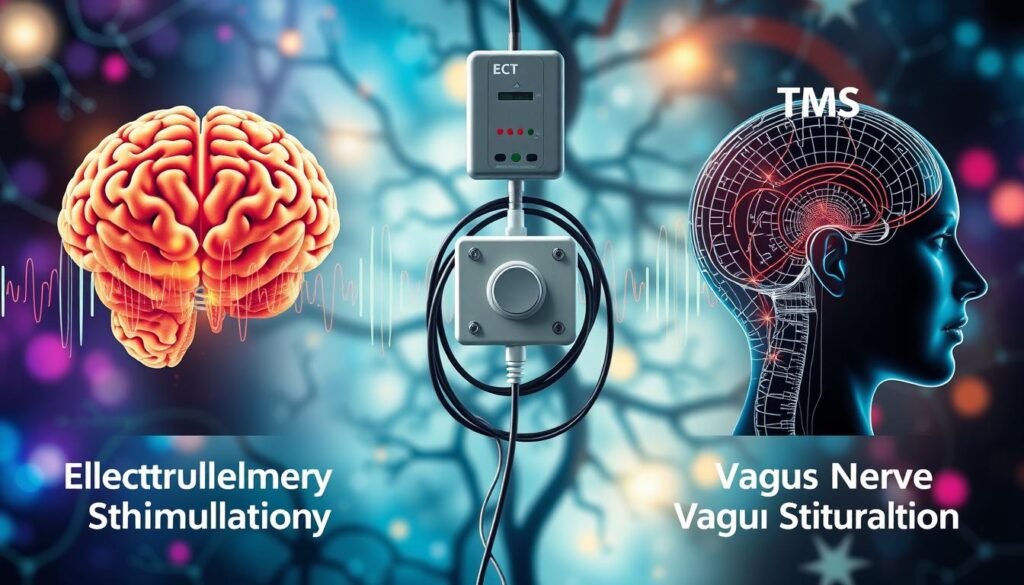
Electroconvulsive Therapy (ECT) is often seen next to methods like Transcranial Magnetic Stimulation (TMS) and Vagus Nerve Stimulation (VNS). They are all used to treat depression. Each one has its own pros and cons. Knowing this helps people choose the right treatment for them.
Transcranial Magnetic Stimulation (TMS)
TMS became available in 1985 and has become popular for treating mood disorders. There are two types: Traditional TMS (rTMS) for depression and OCD, and Deep TMS for broader issues like smoking.
TMS is a non-invasive treatment done as an outpatient. Patients go through sessions daily for 4-6 weeks, each lasting about 20 minutes. It’s generally safe with few side effects, like mild headaches. This makes TMS a good choice for those newly diagnosed or who haven’t responded to other treatments.
Vagus Nerve Stimulation (VNS)
VNS is a long-term treatment for chronic depression. It involves surgery to implant a pulse generator. The benefits may take weeks to show, making it less ideal for immediate relief. Despite its potential for chronic cases, the need for surgery makes it not right for everyone.
| Characteristic | ECT | TMS | VNS |
|---|---|---|---|
| Invasiveness | Invasive | Non-Invasive | Invasive |
| Treatment Duration | 6-12 sessions over 2-4 weeks | 4-6 weeks, daily sessions | Long-term; effects take weeks |
| Effectiveness | High success rates | Moderate effectiveness | Variable effectiveness |
| Side Effects | Memory loss, confusion | Mild headaches, scalp discomfort | Surgical risks, hoarseness |
In the comparison of ECT with TMS and VNS, ECT often works faster and more effectively for severe depression. Knowing the differences between these treatments helps people make better decisions. It allows them to find a treatment match for their needs.
The History and Evolution of Electroconvulsive Therapy
Electroconvulsive therapy (ECT) has come a long way in the past 80 years. It started as a radical treatment but has seen major advancements. These changes have made it safer and more effective for serious mental health problems.
Development and Acceptance Over Time
In Rome, Ugo Cerletti and Lucio Bini introduced ECT. Its acceptance has gone up and down over the years, influenced by society and research. From the 1960s to the 1980s, studies showed ECT worked better than fake treatments and many antidepressants for mood disorders. It also helped prevent suicide, making it a top choice for those at high risk.
Even with new drugs and treatments, ECT has stayed important in psychiatry. It’s especially used in countries like India and China, where it’s often more affordable than medication for treating schizophrenia.
Modern Techniques and Safety Improvements
Modern ECT has seen big improvements. It’s now given with consent, using safer methods. Each year, about 100,000 Americans get ECT, showing it’s widely accepted. While some worry about memory loss, doctors say serious issues are very rare, usually just some short-term forgetfulness around the treatment time.
Today’s ECT is among the best ways to treat certain mental illnesses. It’s really good for severe depression, bipolar disorder, and schizophrenia that don’t respond to other treatments. ECT not only helps quickly with symptoms but is crucial for overall mental health care, helping patients get the best results.
| Decade | Key Developments |
|---|---|
| 1930s | Introduction of ECT by Cerletti and Bini |
| 1960s – 1980s | Studies confirm ECT’s superiority for affective disorders |
| 1980s | Revival of ECT acceptance, gaining popularity |
| Present | Modern techniques ensure patient safety and efficacy |
Post-ECT Care and Recovery
Recovering from ECT needs careful attention and support. After ECT, people may find it hard to get back to their daily life. It’s important to watch recovery closely to help them return to normal smoothly.
Monitoring Recovery After Treatment
Keeping an eye on recovery after ECT is key. Patients rest for about 20 to 25 minutes after treatment. This time lets their vital signs, like blood pressure and pulse, go back to normal. Doctors explain what symptoms to expect, such as headaches, muscle pains, and feeling sick. Understanding these symptoms helps patients get ready for recovery. It’s crucial for them to have regular check-ups. These check-ups help spot and deal with any ongoing issues quickly.
Strategies for Continued Mental Health Support
After ECT, it’s important to keep up mental health support. A good plan is to keep going to therapy and take the right medicines. Combining therapy and medication is really helpful in stopping depression from coming back. Having support from friends, family, or groups is also vital. Putting effort into mental health support greatly helps keep the stability that ECT brings.
Research is making it clear how continuation ECT (C-ECT) and maintenance ECT (M-ECT) help in the long run. These treatments are proven to stop depression from returning. They keep the good results from the initial ECT going. This shows how important they are in treating depression fully.
| Aspect | Description |
|---|---|
| Recovery Duration | 20 to 25 minutes until vital signs stabilize |
| Common Side Effects | Headaches, muscle aches, nausea, memory difficulties |
| Follow-Up Care | Regular monitoring to track recovery and address lingering symptoms |
| Support Strategies | Engagement in ongoing therapy and building a support network |
| Continuation ECT | Helps to maintain treatment response and prevent relapse |
Conclusion
Shock therapy, also known as Electroconvulsive Therapy (ECT), is powerful for severe depression. It’s especially useful when meds and therapy fail. Studies show up to 74.6% of patients improve with ECT. This makes it crucial for those who don’t respond to other treatments.
We’ve looked at ECT’s risks and benefits, care after treatment, and its development over time. Research finds it greatly helps older people by improving their life quality and mental health. This highlights the need for ongoing education about ECT’s benefits in mental health care.
Talking more about mental health lets us see ECT as a real option. With more research and commitment to ECT, we can change how it’s viewed. This could save lives by giving hope to those who think they’ve tried everything.