Did you know more than 1,374 patients with STEMI underwent a specific procedure? They found a link between a type of ECG change and higher death rates in hospitals. Recognizing ST depression criteria is key when looking at ECG patterns. The ST segment is vital in identifying heart problems, especially myocardial ischemia. So, understanding how to evaluate the ST segment correctly is crucial for heart monitoring.
This guide aims to clear up the confusion around ST segment changes. It looks at both normal and abnormal causes. Plus, it offers insights into how to diagnose and treat these changes. By understanding what’s happening, you’ll be able to spot the difference between safe variations and worrisome changes in ECGs.
Key Takeaways
- Understanding ST segment changes is crucial for diagnosing myocardial ischemia.
- Left precordial ST-segment depression is associated with higher in-hospital mortality rates.
- Accurate interpretation of ECG patterns can aid in cardiac monitoring and patient outcomes.
- Advanced coronary artery disease is more prevalent in patients exhibiting ST-segment depression.
- ST-segment depression is defined as a change of ≥1 mm 80 ms after the J point.
Understanding the ST Segment in ECG
The ST segment is a key part in the cardiac cycle. It happens after the S wave ends but before the T wave starts. This part of the ECG is flat and shows when the heart’s cells are calm. Knowing how to read the ST segment is important for spotting heart problems.
When the ST segment doesn’t look right, it often means there’s a big problem. The main issue is usually myocardial ischemia or infarction. A raised ST segment can mean a severe heart attack or block. On the other hand, a lowered segment might show less blood flow to the heart, changes in a specific type of heart attack, or effects of certain drugs.
Getting the ST segment’s shape right helps doctors read the ECG correctly. A normal segment blends smoothly into the T-wave. But, any clear deviation is a red flag. Doctors must investigate these changes fast to provide the right care.
What is ST Depression?
ST depression is a key abnormality noted on an ECG, where the ST segment drops below baseline. It often points to heart issues, such as myocardial ischemia and unstable angina. Doctors consider ST depression significant when its values are 0.5 mm or more.
Different heart problems can cause this condition. They include subendocardial ischemia and non Q-wave myocardial infarction. It is also seen in acute Q-wave myocardial infarction. It’s crucial for spotting heart distress in COVID-19 patients too. Knowing whether ST depression is due to ischemia or other causes is vital.
ST depression is a sign of reversible ischemia in stress tests. An ST depression of 1 mm after adenosine or 2 mm during exercise suggests blood supply issues. Understanding this helps doctors diagnose and manage health, especially in stressful situations. To learn more about ST segment and cardiac issues, check out these resources on ECG interpretation and ST depression significance.
Understanding ST depression is key for healthcare professionals. It helps them decide on treatment quickly, which affects patient results. Keeping an eye on ST segment changes is critical for good heart health management.
Significance of ST Segment Analysis
ST segment analysis is key in checking heart health. It looks at changes from the normal heart line. This can show signs of heart issues like myocardial ischemia. Quick ST segment analysis helps catch heart problems early.
Many studies from 1975 to 2002 missed a key step. They did not adjust for baseline ST depression. This was ignored in 52% of studies. Also, 45% of these studies looked for both J-point and ST depression. This shows how tricky it can be to diagnose heart problems right.
The findings are striking. A method that uses J-point depression catches 24% of ischemic events. If we need J-point depression too, only 15% are found. When we adjust for baseline ST depression, only 4.5% show ischemia.
Different centers have their methods for ST segment analysis. 48% use the PR segment as their reference point. This makes diagnosing heart conditions harder. It shows we need a common way to do this.
It’s crucial to understand ST segment changes. They can point to myocardial ischemia. This happens when the heart lacks oxygen. Other issues, like hypokalemia, can also change the ST segment. So, a detailed check is vital for the right treatment.
ST Depression Criteria
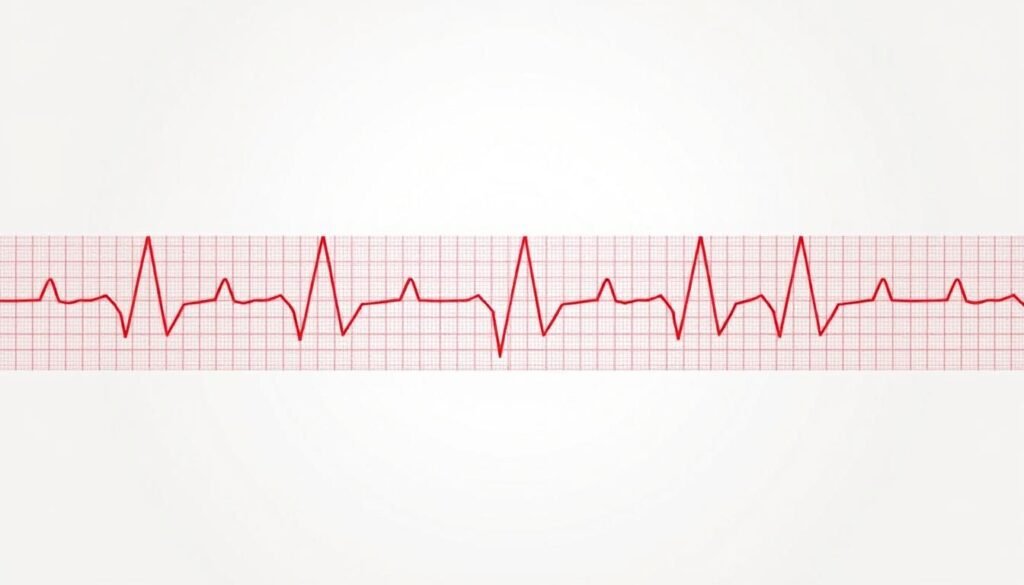
The criteria for ST depression are key in spotting heart issues, especially when ECG results are not normal. To spot potential problems, doctors look for a drop of 0.5 mm or more at a specific point on the ECG. This helps them decide if more tests are needed.
In certain parts of the ECG, like leads V2 and V3, changes are especially important to note. When depressions are seen here, it’s rare in healthy people. This can help doctors figure out how serious the heart problem might be.
Understanding ST depression criteria helps doctors act quickly. Adding this knowledge to their assessments makes patient care better. For more details on these ECG signs, you can look at myocardial ischaemia ECG libraries.
Physiological Causes of ST Segment Depression
Knowing why ST segment depression happens is key to heart health. Exercise and hyperventilation are two main reasons. They cause temporary changes on an ECG, which are different from disease-related changes.
Effects of Exercise on ST Segment
When you exercise, your body adjusts in ways that may cause ST segment depression. This type of depression has an upsloping ST segment. It’s less than 1 mm at the J-60 point on the ECG. After exercise, these changes go back to normal quickly. This shows a healthy response to activity.
It’s critical to know the difference between exercise effects and serious heart problems. This knowledge helps with correct diagnosis.
Impact of Hyperventilation on ST Segment
Hyperventilation can cause ECG changes similar to exercise. It affects how oxygen is exchanged in the body. This leads to short-term ST segment shifts, like those from exercising.
Just like exercise, we need to interpret these changes carefully. This prevents mixing them up with serious issues. Watching these ECG changes makes it easier to know if ST depression is physiological.
Pathological Causes of ST Segment Depression
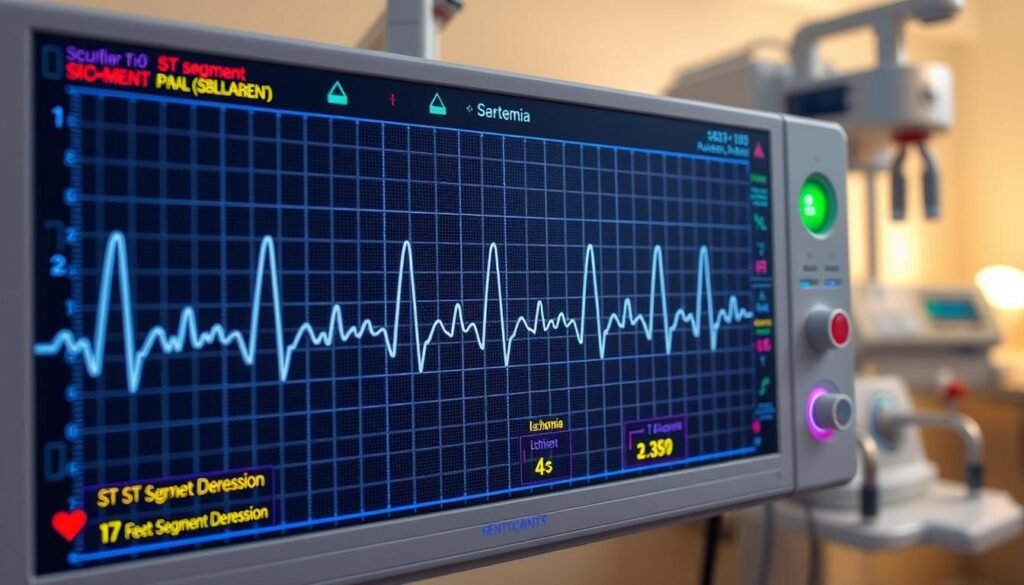
Finding out what pathological ST depression means is key to understanding health issues. This ST segment change often hints at serious heart conditions like myocardial ischemia. Blocked coronary arteries can cut off oxygen to the heart. This leads to signs such as chest pain and high troponin levels. Spotting these signs with an ECG is very important for checking a patient’s heart health.
Myocardial Ischemia and Its Indicators
Myocardial ischemia plays a big part in pathological ST depression. It happens when the heart doesn’t get enough oxygen. People with this issue might feel chest pain, get tired easily during exercise, or have trouble breathing.
- Chest pain or discomfort
- Shortness of breath
- Fatigue during physical activity
About 25.4% of patients show ST-segment depression. ECGs can show patterns like horizontal or downsloping types. When someone has this symptom, it’s crucial to look closer and manage it right away. For more details, check out this resource.
Conditions Associated with Hypokalemia
Hypokalemia is another key issue leading to pathological ST depression. Low potassium levels impact the heart’s electrical activity, causing ST segment changes. Symptoms of hypokalemia include:
- Muscle weakness
- Cramping
- Palpitations
To treat hypokalemia, patients often need more potassium and changes in their diet. Watching for heart problems caused by low potassium is vital for handling this condition well. In short, connecting ST segment changes to health problems like hypokalemia and myocardial ischemia is crucial for doctors to prevent further issues.
Primary vs Secondary ST Segment Changes
It’s important to know the difference between primary and secondary ST changes for accurate ECG reads. Primary ST depression often comes from within. It is usually due to ischemia or electrolyte issues. These signs need quick action, especially in patients at high risk.
Distinguishing Primary ST Depression Causes
Primary ST depression may be linked to conditions like acute coronary syndrome. Here, the heart’s electrical activity is directly impacted by ischemic events. About 33% of NSTEMI patients show ST depression. This requires quick management. The American College of Cardiology and the American Heart Association stress knowing these patterns. It helps tell different heart attacks apart.
Understanding Secondary ST Segment Changes
Secondary ST changes stem from issues in depolarization that affect repolarization. These are often seen in left bundle branch block and LVH, with LVH being common in emergency patients with chest pain. About 60% to 80% of ST elevation cases don’t meet STEMI criteria. This shows how complex ECG interpretation can be.
Clinicians must understand these differences to choose the right treatment. Wrong readings can lead to misdiagnosis. This could harm patient outcomes.
| Type of ST Change | Cause | Common Clinical Context |
|---|---|---|
| Primary ST Depression | Ischemia, Electrolyte Imbalances | Acute Coronary Syndrome, NSTEMI |
| Secondary ST Changes | Abnormal Depolarization | Left Bundle Branch Block, LVH |
Diagnostic Tools for ST segment Evaluation
Checking ST segment changes is key for heart health. The electrocardiogram (ECG) is the top tool for this. It checks for ST segment depression without being invasive, which hints at heart issues. It’s important since over 7 million people get diagnosed with Acute Coronary Syndrome (ACS) each year. Many of these cases end up in hospitals across the United States.
Importance of ECG in Cardiac Monitoring
The ECG’s role goes beyond finding issues with the ST segment. It also keeps an eye on the heart’s health over time. Health experts use it to make quick calls, especially for ST-elevation myocardial infarction (STEMI). Reading the ECG correctly can lead to fast action. This can reduce death rates by a lot for STEMI patients.
The Role of Additional Testing in Diagnosis
The ECG is vital, but other tests also help check the ST segment. Tests like echocardiograms, stress tests, and angiography offer more details. They look into how the heart works and its blood flow. Using these tests, doctors can create precise treatment plans. This improves how they handle heart diseases, affecting millions worldwide.