About 15-20% of people worldwide face depression. This shows a big need for effective treatments. Traditional Chinese Medicine (TCM) has helped with emotional health for over 3,000 years. It offers natural ways to find balance in both mind and body.
TCM uses methods like acupuncture, herbal remedies, dietary changes, Qigong, Tai Chi, and Tuina massage. This approach is now getting attention in the U.S. Groups like the National Institutes of Health (NIH) see its value. TCM aims to fix emotional stability, not just the symptoms. This means treatments meet each person’s specific needs.
Looking into how depression affects the body and brain is key. Understanding these changes helps find the best treatments. Learn more here.
Key Takeaways
- Traditional Chinese Medicine for Depression includes therapies that have been practiced for thousands of years.
- TCM emphasizes a holistic approach, integrating body and mind for better emotional balance.
- Natural relief methods in TCM include acupuncture, herbal remedies, dietary adjustments, and more.
- The popularity of TCM is on the rise in the U.S. as more people search for alternatives to prescription medications.
- Research continues to validate the effectiveness of TCM practices in treating depression and anxiety.
Understanding Depression through Traditional Chinese Medicine
Depression can significantly affect how someone feels about life. Traditional Chinese Medicine (TCM) looks at depression differently. It focuses on keeping the body in balance. TCM believes our emotional and physical health are linked through concepts like Shen and Qi.
The Concept of Shen and its Role in Emotional Health
In TCM, Shen is what we would call the spirit or mind. It is key to how we feel. If the Shen is upset, one might feel lost or overwhelmed by emotions. This is similar to depression. To feel better emotionally, TCM works on calming the Shen by tackling what’s causing the imbalance.
Disturbance of Qi and Its Impact on Mood
Qi, or life energy, matters a lot in TCM. It affects our body and mood. Problems like stress or bad lifestyle habits can block Qi. This can make someone feel emotionally down or stuck. Fixing issues with Qi is crucial for feeling happier and more balanced. To learn how TCM can be a path to better mood management, check out this in-depth look.
Traditional Chinese Medicine for Depression: Overview of Therapies
Depression is complex, involving root causes, symptoms, and effects on well-being. Traditional Chinese Medicine (TCM) takes a holistic view. It sees the body as one entity, not just a collection of symptoms. TCM aims to boost mental health through various therapies tailored to individual needs.
Holistic Approach to Healing
TCM focuses on holistic healing. It considers a person’s physical, emotional, and social health. With unique plans for each person, practitioners combine herbal remedies, acupuncture, and lifestyle changes. This approach targets the deep-rooted causes of depression, like emotional or systemic issues.
Individualized Treatment Plans
TCM creates specific treatment plans for each person. These can include:
- Chinese herbal medicine
- Acupuncture
- Massage techniques
- Mindfulness practices like Tai Chi
- Cupping therapy
Custom treatments tackle both symptoms and causes of depression. Studies show these personalized plans may work better and with fewer side effects than standard drugs. For deeper insight into TCM’s effectiveness against depression, check this study.
Merging holistic healing with tailored treatment helps overcome depression. It also promotes mental well-being, empowering those affected.
Acupuncture for Depression: A Gentle Relief
Acupuncture is key in Traditional Chinese Medicine (TCM) for helping with depression. It soothes emotional pain by using thin needles at specific body points. This encourages Qi to flow smoothly. Activating these points helps balance emotions and boosts well-being.
How Acupuncture Works
Acupuncture looks to fix the main causes of depression. It tries to balance the body’s energy. According to TCM, our emotional health depends on Qi flow, which can get blocked. Targeting certain points can release endorphins. This helps improve mood and mental health. The goal is to treat symptoms and bring back body harmony.
Research Supporting Acupuncture Efficacy
A lot of research supports acupuncture for treating depression. A big review looked at 64 studies with 7,104 people. It found acupuncture can somewhat lower depression’s intensity. Electroacupuncture with antidepressants was especially effective. It had a notable improvement over just waiting, with a significant mean difference of -8.86.
Acupuncture isn’t just about easing symptoms. It works well alongside other treatments. Studies show combining it with medication can be very effective. It significantly reduces depression levels, showing a mean difference of -1.15. Those with depression might find acupuncture a good option. It deserves to be considered with other treatments. You can find more about this in studies about the role of TCM in mental health.
Herbal Remedies for Depression: Nature’s Pharmacy
Herbal remedies have been key in Traditional Chinese Medicine (TCM) for managing emotions. This approach seeks to balance the body. It uses many Chinese herbs to help treat depression and its symptoms.
Popular Chinese Herbs Used in Treatment
TCM uses special Chinese herbs for depression. Ginkgo biloba stabilizes mood, while Chaihu helps with Qi flow. These herbs improve both emotional and mental health.
Clinics like Weng’s Acupuncture & Herbs offer personalized herbal formulas. These formulas are made to fit each patient’s health goals. They blend herbs to balance the body and ensure lasting health.
Effectiveness of Herbal Formulas Like Xiaoyao Powder
Xiaoyao Powder is highly valued in TCM for treating liver Qi stagnation, which affects mood. It not only eases depression but also helps control emotions. Some studies show herbal remedies can work as well as antidepressants for mild to moderate depression. They offer a natural choice with fewer side effects.
Herbal remedies are becoming more accepted along with standard treatments. They highlight the need for a holistic health view. Always consult with experts in herbal medicine for safe use. For more insights, check out herbal medicine resources online.

| Herb | Primary Benefits | Research Support |
|---|---|---|
| Ginkgo Biloba | Enhances emotional stability | Limited evidence for specific conditions |
| Chaihu | Regulates Qi | Traditional use with anecdotal support |
| Xiaoyao Powder | Soothes liver Qi stagnation | Notable effectiveness in various studies |
| St. John’s Wort | Used for mild to moderate depression | Limited data on long-term efficacy |
Chinese Dietary Therapy for Depression: Food as Medicine
Chinese dietary therapy links nutrition closely with how we feel emotionally. It’s based on the belief that food doesn’t just feed the body. It also has a big impact on our mental health. In Traditional Chinese Medicine (TCM), certain foods affect Qi and blood flow. These are key for stable emotions and clear thinking.
Importance of Nutrition in Emotional Well-Being
A balanced diet is central to feeling good emotionally. Eating mental health foods can help lessen depression. Adding nutrient-rich foods to daily meals boosts emotional strength. This strategy corrects body imbalances that may worsen sadness or anxiety.
Foods to Incorporate for Better Mental Health
Adding certain foods can improve emotional health. Here are some suggestions:
- Whole grains like brown rice and quinoa are packed with nutrients for the brain.
- Nuts, especially walnuts and almonds, contain omega-3 fatty acids, boosting mood.
- Dark leafy greens, including spinach and kale, have vitamins for brain wellness.
- Lotus root and red dates regulate heart and liver heat, affecting emotions.
Drinking herbal teas like rose or chrysanthemum also helps with liver detox, reducing depression. A diet that follows Chinese dietary therapy nourishes the body and supports emotional balance. It’s key for fighting depression.
Qigong for Depression: Cultivating Inner Peace
Qigong is a gentle yet powerful way to find inner peace and tackle emotional challenges like depression. It melds fluid movements, mindful breathing, and meditation into a holistic method. As one of the four main parts of traditional Chinese medicine, it stands alongside acupuncture, massage, and herbal remedies. Qigong is a rich path for those looking to ease their depression.
The Benefits of Qigong Practice
Qigong goes beyond just easing stress. It can boost circulation, balance, flexibility, and strength with regular use. Studies hint that it can brighten moods and ease anxiety and depression. It focuses on Qi, or energy flow, to align mental, emotional, and physical health.
Its key perks include:
- Enhanced mood and emotional strength
- Better focus and cognitive function
- Stronger immune system and less inflammation
Though more study is needed, these findings push many to turn to Qigong for emotional healing.
Integrating Qigong into a Daily Routine
Making Qigong a daily habit can greatly aid emotional balance. It only needs 20 minutes a day, open to anyone. Qigong is safe with hardly any side effects, offering a forgiving way to deal with depression.
To support the practice:
- Pick specific times for Qigong each day
- Use guided videos or workshops, like the online Qi Gong for Depression course
- Focus on breath work, visualization, and setting intentions during sessions
Sticking with it unlocks deep Qigong benefits, uplifting emotional health.

Tai Chi for Depression: Movement and Mindfulness
Tai Chi combines gentle movements with mindfulness. It’s popular for reducing stress and improving emotional well-being. This ancient martial art enhances mental health by promoting physical conditioning. The flowing motions help relax the mind and increase body awareness, easing depression.
How Tai Chi Reduces Stress
Tai Chi is a proven way to lower stress. It uses slow movements to bring about relaxation and improve Qi flow. People who practice Tai Chi note less anxiety and depression, studies show.
Research Findings on Tai Chi and Mental Health
Studies have shown Tai Chi helps with depression. Older Chinese patients saw mood improvements after three months. Plus, those doing Tai Chi with their meds had better outcomes than those just getting health education.
Pregnant women who did Tai Chi and yoga felt less depressed and anxious in 12 weeks. Tai Chi also helped Chinese Americans with major depressive disorder. Even though numbers weren’t dramatic, they still did better than those who waited.
A major review of forty studies praised Tai Chi’s mental health benefits. It suggests Tai Chi could be a great option for fighting depression.
| Study Focus | Duration | Participants | Outcomes |
|---|---|---|---|
| Older Chinese Patients | 3 months | 100 | Significant reduction in depressive symptoms |
| Pregnant Women | 12 weeks | 80 | Lower scores in depression and anxiety |
| Chinese American with MDD | 12 weeks | 120 | Better response rates in Tai Chi group |
Tuina Massage for Depression: Hands-On Healing
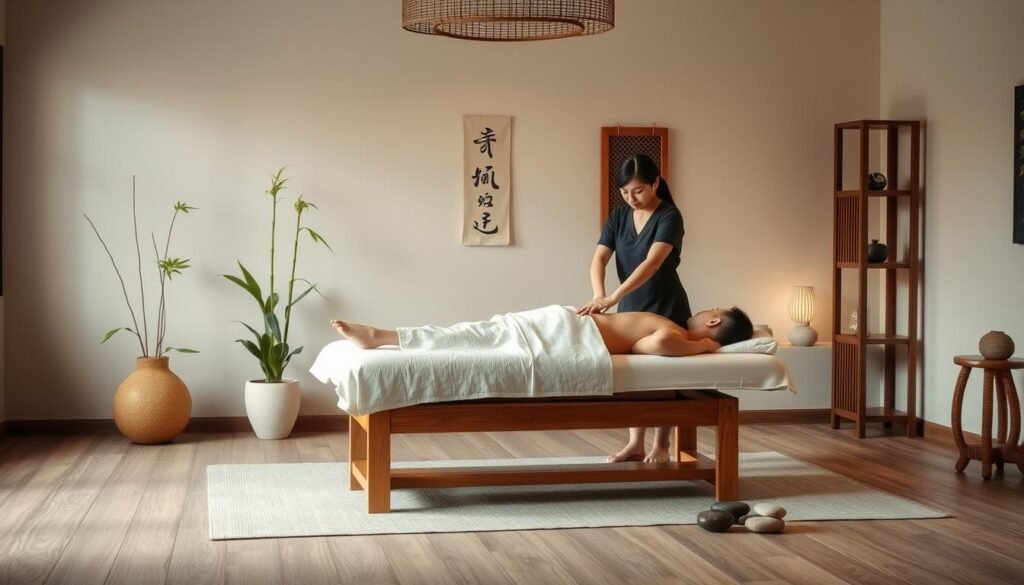
Tuina massage is a key part of traditional Chinese medicine (TCM). It uses special techniques to improve both mental and physical health. This healing touch aims to free trapped Qi and cut down on stress. Doing so can be a big help in battling depression.
Techniques and Benefits of Tuina
In Tuina massage, there’s a lot of kneading, pressing, and rolling of the body. These actions help relax the body and calm the mind. Studies show that Tuina could be great for people getting better from strokes. It’s known for easing pain and boosting emotional well-being.
Tuina as part of a Comprehensive Treatment Strategy
Tuina massage fits well into a broad plan for fighting depression. It often goes hand in hand with other TCM methods, like acupuncture and herbal remedies. This mix can make treatments work better, leading to fewer depression symptoms. Regular Tuina sessions can make a real difference in someone’s mental health journey.
Cupping Therapy for Depression: An Alternative Treatment
Cupping therapy has become a fascinating alternative in Traditional Chinese Medicine (TCM) for mental health issues. It uses suction with glass or silicone cups to improve blood flow and Qi movement. This is crucial for reducing stress and emotional tension.
Applications of Cupping in Mental Health
Cupping isn’t just for physical pain. It’s becoming popular for depression by enhancing emotional well-being. It relieves anxiety and depression symptoms too. Cups placed on the back and shoulders help relax and ease stress.
Scientific Backing for Cupping’s Benefits
Research supports the use of cupping therapy, showing it can boost mental health. Studies suggest it’s a useful addition to TCM. Despite mixed results, evidence points to its benefits for those facing emotional issues.
| Aspect | Details |
|---|---|
| Cost per Session | $30 to $100, depending on location and duration |
| Typical Cup Usage | 3 to 5 cups in the initial session; max of 5 to 7 cups |
| Session Frequency | Every 4 to 8 weeks for repeated sessions |
| Primary Providers | Massage therapists, acupuncturists, physical therapists |
| Common Side Effects | Mild discomfort, bruises, skin infections |
| Historical Significance | Practiced since ancient times, noted in texts from 1550 BC |
Conclusion
Traditional Chinese Medicine (TCM) offers many therapies for fighting depression. It looks at the spirit, body, and mind together. This means TCM gives care that is just right for each person. Now, more people want natural ways to feel better. TCM can guide them to emotional health.
TCM includes treatments like acupuncture and herbal remedies. One such remedy is Jia Wei Xiao Yao San (XYS). Studies show these treatments work well. For example, a big study found fewer side effects in patients taking XYS than in those on standard drugs like sertraline. This makes TCM a good choice, especially when you think about the bad effects of some regular depression drugs.
Exploring TCM, people find activities like Tai Chi and Qigong. These help a lot with depression and mental health. With 280 million adults worldwide dealing with depression, it’s important to look for new ways to help. TCM is promising. It doesn’t just fight depression. It improves life overall.