Did you know more than 264 million people worldwide have depression? In the United States alone, about 17.3 million adults are affected. Research is showing a clear link between lacking vitamin B12 and feeling moodier. A piece in the Journal of Psychopharmacology back in 2005 found less B12 meant more depression symptoms. It’s key to know how low B12 can affect people, especially those who don’t eat meat, vegans, and older folks.
Vitamin B12 matters a lot for our brains and mood. If we don’t get enough, it can mess with our nerves and make us feel down. Getting into the details, this article helps you understand why B12 is vital for staying mentally healthy.
Key Takeaways
- Vitamin B12 deficiency can contribute to mood disorders, including depression.
- Symptoms of low Vitamin B12 may include exhaustion, confusion, and changes in appetite.
- Individuals on vegan or vegetarian diets are at higher risk for Vitamin B12 deficiency.
- Research suggests that daily supplementation of Vitamin B12 can improve treatment outcomes for depression.
- Understanding these connections can help manage and potentially reduce depressive symptoms.
Understanding Vitamin B12 Deficiency
Vitamin B12, known as cobalamin, is essential for our health. It helps make red blood cells, supports brain function, and is part of DNA creation. Since it’s mostly found in animal products, vegetarians and vegans often don’t get enough.
What is Vitamin B12?
Vitamin B12 keeps nerve cells healthy and makes DNA and red blood cells. Not having enough can harm your body and mind. People with low B12 can face a variety of health issues.
Symptoms of Vitamin B12 Deficiency
It’s crucial to know the symptoms of B12 deficiency to catch it early. Common signs are:
- Fatigue and weakness
- Digestive issues
- Numbness or tingling in extremities
- Muscle weakness
- Memory loss
- Mood changes, like depression and anxiety
Lacking B12 can also cause severe brain problems. Things like confusion, more memory loss, and even psychosis might happen. Studies show that not having enough B12 might lead to mental decline and more depression.
| Symptom | Description |
|---|---|
| Fatigue | Feeling unusually tired or weak |
| Numbness | Loss of sensation or tingling in hands and feet |
| Memory Loss | Difficulty remembering information or recalling events |
| Mood Changes | Increased feelings of depression or anxiety |
| Confusion | Feeling disoriented or confused in familiar environments |
Spotting these symptoms early can help avoid more serious problems from a lack of B12.
Vitamin B12 and Its Role in Mental Health
Vitamin B12 plays a key role in our mental well-being. It affects how our brain works and our mood. If we don’t get enough, we might feel down or forget things easily.
How B12 Affects Brain Function
Vitamin B12 is super important for our brains. When we don’t have enough, we might feel moody or struggle to think clearly. Keeping enough B12 in our system keeps our brain healthy. For more on mood and B12, it’s a good idea to eat right or take supplements. Checking out trusted sites helps us learn more.
Connection Between B12 and Neurotransmitters
B12 helps make important brain chemicals like serotonin and dopamine. Not having enough can make us feel anxious or sad. By getting more B12, through food or vitamins, we can boost our mood. Keeping our B12 levels healthy is good for our mental health.
Link Between Vitamin B12 and Depression
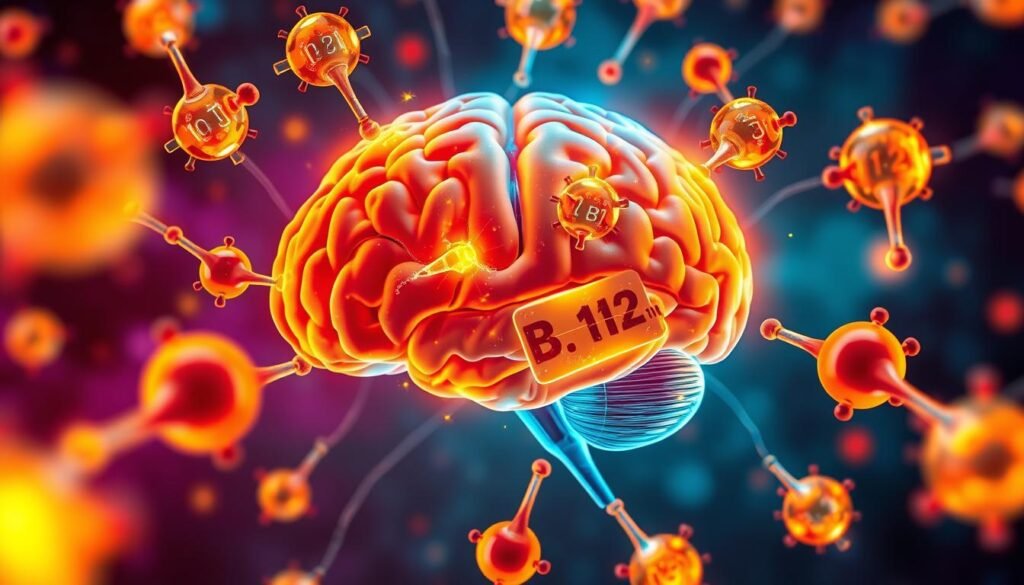
Exploring how vitamin B12 and depression are linked is important in mental health. Studies show a clear connection between low B12 levels and depression. Signs like fatigue, mood swings, and trouble thinking are common. They make it harder to spot mood disorders. Experts believe B12’s role in making neurotransmitters is key for mental health.
Research Studies Indicating a Correlation
Research finds that people with low B12 often feel more depressed. One study found these folks had a 51% higher risk of depression after four years. It shows that boosting B12 might help fight b12 depression in older people.
Effects of Low B12 on Mood Disorders
Low vitamin B12 affects various mood issues, showing why good nutrition matters. After COVID-19, nutritional gaps led to more loneliness and depression among the elderly. Adding more B12 to your diet or through supplements could help. Research is ongoing to fully understand B vitamins and mood.
Who is at Risk for Vitamin B12 Deficiency?
Some people are more likely to lack vitamin B12. Knowing who is at risk helps with early prevention. Vegetarians, vegans, and older adults often face this issue. They might not get enough B12 due to diet or less stomach acid.
Vegetarians and Vegans
Vegetarians and vegans might not get enough B12 because they don’t eat animal products. B12 is important for the brain. People who don’t eat meat need to be careful about their B12 intake.
They should think about eating foods with added B12 or taking supplements. This helps keep their B12 levels healthy.
Older Adults and Absorption Issues
Older people also struggle with B12 deficiency. As we age, our bodies make less stomach acid. This makes it hard to absorb nutrients.
Problems like Crohn’s disease or celiac disease can also affect how well they absorb B12. Seniors should have regular checks to spot low B12 early. Doctors might suggest special diets to make sure they get what they need.

If you’re curious about B12 deficiency and mental health, there is a lot to learn. Issues like anxiety and depression can be linked to low B12. For more on how B12 affects the mind, check out a detailed article here.
How Vitamin B12 Deficiency Leads to Neurological Symptoms
Vitamin B12 deficiency affects brain function, leading to problems. It causes cognitive decline and mental health issues. This vitamin is vital for making myelin and neurotransmitters, important for nerve health. A shortage can cause too much homocysteine, leading to brain issues and nerve damage.
People often report memory loss, pain, numbness, and anxiety due to this deficiency. A case study showed someone with low vitamin B12 had nerve and mental symptoms. But, they got much better two weeks after treatment. This shows the importance of vitamin B12 for nerve health.
Table 1 shows different vitamin B12 levels and their effects:
| Vitamin B12 Levels (pg/mL) | Status | Implications |
|---|---|---|
| Below 200 | Insufficient | High risk of neurological symptoms and cognitive decline |
| 200 – 300 | Borderline | Potential for cognitive issues, needs watching |
| Above 300 | Normal | Lower chance of brain and nerve problems |
Lack of vitamin B12 can weaken, cramp, and reduce coordination. It can harm many body functions, including sexual health in men. Some even experience vision issues due to optic nerve damage.
Studies show we need enough vitamin B12 to avoid brain decline and nerve symptoms. If at risk, starting to eat better or take supplements early helps. To learn more about vitamin D, depression, and similar topics, visit this resource.
b12 depression: Exploring the Connection
The link between vitamin B12 and mental health is important for regulating mood. Studies show B12 is key in keeping serotonin levels healthy. Since serotonin helps control our mood, understanding B12’s role is crucial for handling depression related to B12.
The Role of Serotonin and Mood Regulation
Not having enough vitamin B12 can lead to less serotonin, which may cause psychological issues. A large review saw that those with ADHD and ASD had notably lower B12 levels than others. This shows a clear link between low B12 and mood problems like depression.
Taking more B12 might help raise serotonin for those feeling depressed. Although eating more B12 seems to lower depression risk, its exact benefits still need more research. A review did show, however, that higher B12 intake could reduce behavioral issues.
It’s crucial to check for vitamin shortages in those with mood problems. B12 lack could be a fixable cause of some mental disorders, especially in young people. Even though research gives mixed findings, it’s being studied if B12 can support other depression treatments.
| Condition | Vitamin B12 Level Comparison | Implication |
|---|---|---|
| Autism Spectrum Disorders (ASD) | Lower levels (SMD, -1.61) | Potential association with mental health issues |
| Attention Deficit Hyperactivity Disorder (ADHD) | Lower levels (SMD, -0.39) | Correlation to behavioral challenges |
| Depression | No significant difference (SMD, -0.06) | Further investigation required |
| Higher Vitamin B12 Intake | Associated with lower risk of depression (OR, 0.79) | Encourages a focus on dietary habits |
The role of vitamin B12 in mood regulation and serotonin impact is a key mental health area to watch. For more details on this topic, visit this resource.
Diagnosis and Testing for B12 Deficiency
To find a vitamin B12 deficiency, doctors use blood tests and look at symptoms carefully. The blood tests are important to check serum B12 levels. Healthy people have levels between 200 pg/mL and 900 pg/mL. Older adults, especially those over 60, are more likely to have this deficiency.
Blood Tests and Symptoms Assessment
About 10% to 15% of older adults might have a B12 deficiency. Symptoms like fatigue, cognitive problems, or mood changes mean they need blood tests and a detailed check of symptoms. Many also have conditions like atrophic gastritis, which makes it hard for their body to absorb B12, affecting 20% to 50% of older people.
| Test Type | Normal Range | Deficiency Marker |
|---|---|---|
| Serum B12 Level | 200 – 900 pg/mL | Below 200 pg/mL |
| Desirable B12 Status for Elderly | 300 – 350 pg/mL | Below 300 pg/mL |
| Methylmalonic Acid Level | Normal Range | Increased levels indicate deficiency |
| Homocysteine Level | Normal Range | Increased levels indicate deficiency |
When to Consult a Healthcare Provider
If you show signs or test results suggest a B12 deficiency, see a healthcare provider soon. About 15% of people over 65 might have a vitamin B12 deficiency. If blood tests are not normal, a healthcare provider might suggest taking B12 through pills or shots.
Treatment Options for Vitamin B12 Deficiency
Addressing a vitamin B12 deficiency requires two steps. First, change your diet. Then, think about adding supplements if needed. A diet with lots of B12-rich foods is key. This includes lean meats, fish, dairy, and some cereals. But, if you’re vegan, vegetarian, or have trouble absorbing nutrients, diet alone might not work. In such cases, you might need extra support from supplements.
Dietary Changes
Adding B12 sources to your meals is important for your health. Adults need around 2.4 micrograms of B12 each day. This info helps with meal planning. Older folks and people with digestive issues need to focus more on getting B12. If you can’t get enough B12 from food, or if certain meds make it hard to absorb, supplements might be needed.
Supplements: Should You Take Them?
Whether you need B12 supplements depends on your health and needs. Starting with diet changes is good. Yet, supplements help with severe shortages or if surgery affects B12 absorption. Doctors can recommend the right type and amount of supplement. They make sure it doesn’t clash with other treatments. With the right care, recovery from B12 deficiency can start within weeks. This improves energy and overall health.