Ever felt your sadness might be something more? It’s key to know about mild depression. It’s subtle but impacts many without clear signs. Knowing when to seek help is vital. This guide sheds light on managing depression. It helps folks understand their feelings and get professional advice when needed.
One in six people will face major depression in their life. Yet, many overlook early signs, thinking it’s just sadness or tiredness. But constant despair affects your life, relationships, and happiness. Knowing about mild depression and its signs is the first step. It lets people get help before things get worse. To learn more, check out the National Institute of Mental Health.
Key Takeaways
- Mild depression can affect anyone, regardless of age or background.
- Symptoms can persist for weeks or months, affecting daily life.
- Recognizing the need for professional help is crucial for mental well-being.
- Understanding the difference between mild and major depression aids in seeking appropriate treatment.
- Life changes, therapy, and medication can effectively manage depression.
Understanding Mild Depression
Mild depression makes people feel really low and lose interest in fun activities. It’s not as severe as major depression, but it still messes with day-to-day life. People with mild depression often feel sad, cranky, and powerless. That’s why it’s key to understand it well.
This condition is part of a bigger group of depressions, including one called dysthymia. Dysthymia lasts for a long time and usually needs ongoing treatment. It’s more common in women than men, which means we need to think about treatments that work well for both sexes. Without treatment, mild depression can turn into something more serious.
It’s crucial to spot the symptoms early to get the right help. Treatment often includes therapy and meds, customized for each person. Antidepressants might take a while to work, so staying in touch with your doctor is important. Tackling risks like genetics and life stresses helps a lot too.
Mild depression is a key issue in the depression family, but there are ways to fight it. The right support can make a big difference in how someone feels. It leads to better health and a happier life.
Symptoms of Mild Depression
Mild depression includes emotional and physical problems that greatly affect day-to-day life. It’s crucial to notice these mild symptoms early. This is so people can deal with them before they get worse. Some common signs are:
- Persistent sadness
- Irritability
- Fatigue
- Difficulty concentrating
- Loss of interest in previous activities
It’s hard to spot depression because it varies among people. Some feel many symptoms, while others have just a few. This creates a minor but clear change in how they feel. Without realizing these signs, someone might ignore them, thinking it’s a temporary mood. But, if not acknowledged, these symptoms could hurt their relationships and how well they do at work.
Doctors use the Diagnostic and Statistical Manual of Mental Disorders (DSM-5-TR) to diagnose depression. They note the importance of having at least five symptoms for more than two weeks for a clear diagnosis. With mild depression, though, symptoms might be less but still noticeable. This slight distress can still let a person do some everyday activities.
Noticing symptoms of mild depression early is key. It encourages people to seek help and find ways to cope. Doing this keeps the condition from getting worse.
When to Seek Help for Mild Depression
Knowing when to find help for mild depression is key. If you feel sad, hopeless, or don’t enjoy things for over two weeks, seek support. These feelings often mean professional help can make a big difference.
Recognizing Persistent Symptoms
It’s crucial to notice signs that you may need help with mild depression. If you feel:
- Constant sadness that won’t go away
- No joy in activities you once loved
- Trouble focusing or making choices
- Sleeping too little or too much
- Changes in how much you eat or weigh
These signs may show a bigger problem if they disrupt your life. Recognizing them early can push you to seek help sooner.
Impact on Daily Life and Relationships
Mild depression can really affect your life. You might struggle at work or in personal relationships. Being irritable and pulling away from people can make you feel even more alone.
Getting less support from loved ones is common, as they may not understand what you’re facing. Professional help can offer ways to handle these issues. It helps improve how you interact with others and make life better.
Mild Depression vs Major Depression
Mild depression and major depression are different types of depression. They vary in severity of depression and effect on everyday life. Knowing the difference between them is key for getting the right help early.
Mild depression usually shows two to four symptoms. It might hinder some daily activities, but doesn’t significantly stop daily life. On the other hand, major depressive disorder (MDD) shows at least five symptoms for more than two weeks. This level of symptoms greatly disrupts a person’s everyday tasks.
The signs of mild depression can be seen as just brief sadness. Yet, signs of major depression can lead to long-lasting issues. These affect relationships, how well someone can work, and how they care for themselves. Spotting these signs early is vital to choosing the right treatment, like how some antidepressants can quickly help with mild depression.
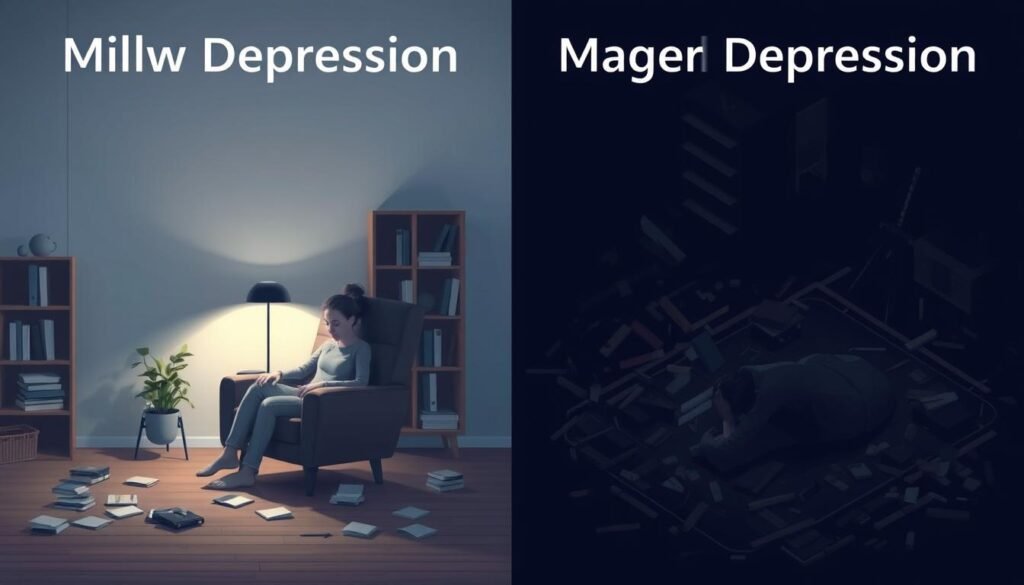
Statistics show that while mild depression might get better with lifestyle adjustments, major depression needs urgent care due to its lasting stress. Not noticing mild depression early can lead to more serious problems. This underlines the need for correct diagnosis and regular check-ups.
| Feature | Mild Depression | Major Depression |
|---|---|---|
| Symptoms Required for Diagnosis | 2-4 symptoms | 5 or more symptoms |
| Duration of Symptoms | Variable, often temporary | Symptoms for at least 2 weeks |
| Impact on Functioning | Minor impact on daily activities | Significant impairment in functioning |
| Treatment Options | May include lifestyle changes | Often requires psychotherapy and medication |
| Risk of Progression | Possible, if untreated | High risk of chronic and severe symptoms |
Catching mild depression early can stop it from becoming major depression. So, it’s crucial to pay attention and manage mental health promptly.
Coping with Mild Depression
Coping with mild depression combines self-help and social support. Taking steps can greatly improve mood and well-being. It helps to know how to manage feelings and boost mental health.
Self-Help Strategies
Self-help strategies are key in healing from depression. Think about these methods:
- Engaging in Regular Exercise: Moderate aerobic exercise, like walking for 30 minutes most days, boosts mood. It helps ease sadness naturally.
- Maintaining a Healthy Routine: Having regular sleep and meal times can stabilize your mood. It also reduces symptoms of depression.
- Mindfulness Practices: Meditation and deep breathing can cut down anxiety. They also help in managing emotions better.
- Nutritional Choices: Eating lots of fruits, veggies, and grains can fight depression. A Mediterranean-style diet is good for your overall health.
Importance of Social Support
Social support deeply affects depression. Talking to someone you trust makes a big difference when you’re down. Social connections offer emotional benefits, like:
- Emotional Relief: Opening up improves mood and brings comfort in hard times.
- Encouragement and Motivation: Support from others can inspire you to keep up healthy habits. It also motivates to stay active.
- Preventing Isolation: Staying in touch with others stops loneliness. This can often make depression worse.
Therapy for Mild Depression
Therapy is key in tackling mild depression. It gives people ways to deal with their emotions and boost mental health. Cognitive-behavioral therapy (CBT) is great at changing bad thought habits and making problem-solving better. Usually, this therapy needs 8 to 16 sessions. It helps patients understand their thoughts and actions better.
Interpersonal therapy (IPT) focuses on personal relationships and social life. There are also guided self-help plans. These need 6 to 8 meetings with a therapist. They help in managing symptoms well. These treatments provide a safe space for sharing worries and getting expert advice.
You can find therapy face-to-face or via telehealth services. This makes it easier for those looking for help. Self-referral options, especially with NHS talking therapy services, are quick to access. This ensures people with mild depression get timely assistance.
Below is a comparison of various therapeutic approaches available for mild depression:
| Therapy Type | Session Duration | Focus Area |
|---|---|---|
| Cognitive-Behavioral Therapy (CBT) | 8-16 sessions | Negative thought patterns |
| Interpersonal Therapy (IPT) | 10-15 sessions | Relationships and social interactions |
| Guided Self-Help | 6-8 sessions | Self-management techniques |
| Behavioral Activation | 8-12 sessions | Engagement in valued activities |
| Psychoanalytic Therapy | Variable (12+ sessions) | Exploration of unconscious thoughts |

Seeking professional counseling for depression helps a lot. It helps people escape the cycle of negative emotions. Backed by strong research, these therapies give insights. They offer coping strategies for dealing with mild depression well.
Treating Mild Depression Naturally
Treating mild depression naturally can offer different recovery paths. This can complement traditional therapies well. St. John’s Wort is a popular herbal supplement for mild to moderate depression. Studies show it helps those with mild depression.
Supplements like 5-HTP and SAMe may also aid mood regulation. Yoga practices could offer relief, though more research is needed for a firm conclusion. Touch therapies, focusing on relaxation, might reduce depression symptoms too.
Combining mind/body exercises with bodywork can create a sense of calm. Music therapy has proven to be a helpful depressive remedy, easing fear, anxiety, and stress. This method saw success with WWII veterans and is now used in many care facilities.
Guided imagery, picturing calm scenes, helps lessen depressive symptoms. Alongside, eating a balanced diet is crucial. Diets high in omega-3 oils from fish, nuts, and seeds support healthy brain functions and improve mood.
Positive lifestyle changes boost mental health. These include regular workouts, getting enough sunlight, and building supportive relationships. For those looking for natural treatment options, it’s good to consider different holistic methods. For further information on fighting mild depression, check out these resources.
The Role of Lifestyle Changes
Making small changes in your lifestyle can really help with mild depression. Regular exercise and eating healthy are key. They can make you feel better and improve your mental health. Knowing how exercise and good nutrition help can empower you to take charge of your mental wellness.
Exercise and Physical Activity
Exercise can lift your mood in a natural way. Just 30 minutes of exercise, three to five times a week, can help. It fights off stress and anxiety, boosting self-esteem.
Different physical activities, like jogging, cycling, or walking, are good for your mental health. Staying active regularly improves mood and sleep, which is vital for beating mild depression.
Nutrition and Diet
Eating right is crucial for mental health. A balanced diet can make you happier and more emotionally stable. Important nutrients, like magnesium, folic acid, and vitamin B, are good for your mood. Studies show that amino acids in your diet might lower depression risks.
To support your mental health with diet, focus on colorful fruits and veggies. Include whole grains, lean proteins, and low-fat dairy too.

Eating regularly and watching your nutrient intake helps stabilize mood swings linked to mild depression. A nutritious diet helps you manage your mental health better.
| Food Group | Benefits for Mental Health |
|---|---|
| Fruits & Vegetables | Rich in vitamins and minerals, improve mood and reduce anxiety. |
| Whole Grains | Provide steady energy levels, influencing emotional balance positively. |
| Lean Proteins | Support neurotransmitter function, enhancing mood regulation. |
| Low-fat Dairy | Contains calcium and vitamins that may support brain health. |
Adding physical activity and good nutrition to your life can make a big difference. It can make you more resilient emotionally and improve your mental health overall.
Overcoming Mild Depression: A Holistic Approach
Overcoming mild depression means more than just treating symptoms. It involves looking at what’s causing your mental health issues. Strategies like psychotherapy, natural remedies, and changing your lifestyle are key. A plan that focuses on both your mind and body can really help.
Making changes to what you eat, exercising regularly, and therapy can improve your mood. Foods like fish and nuts are especially good for beating depression. Studies also show that working out for just 30 minutes a day can make you feel better.
Trying natural options like St. John’s wort might help, as research suggests it’s effective for mild depression. Omega-3 supplements can also be useful, depending on what your body is missing. Combining traditional and alternative medicine is important for dealing with depression. The holistic approach to depression needs patience and experimenting with different treatments and therapies.
Getting support from people you care about creates a stronger mental health support system. This support is key to bouncing back and preventing depression from coming back. Techniques like mindfulness-based cognitive therapy and meditation also play a big role in healing and maintaining a positive outlook.
| Approach | Description | Effectiveness |
|---|---|---|
| Psychotherapy | Cognitive Behavioral Therapy (CBT) focusing on changing negative thought patterns. | Highly effective for many individuals. |
| Natural Remedies | Herbal supplements such as St. John’s wort and chamomile. | More effective than a placebo for many. |
| Physical Activity | Consistent exercise regimen improving mood and quality of life. | Proven to help relieve symptoms significantly. |
| Mindfulness | Incorporates meditative practices to enhance mental clarity and positivity. | Effective in treatment and prevention of relapse. |
| Diet | Focus on foods high in omega-3s and other mood-lifting nutrients. | Can reduce symptoms if deficiencies are present. |
Committing to a holistic approach helps you find your own way to beat mild depression. It also leads to a healthier way of living.
Conclusion
It’s very important to know about mild depression to help boost mental health awareness. Knowing when to get help is key. Symptoms can include feeling sad all the time, eating less or more, and having trouble sleeping. These can really affect someone’s life and their relationships. Luckily, many people get better with therapy or medicine.
This article showed how self-help and support from others can help someone recover from mild depression. Understanding mental health completely allows for better care. Using the DSM-5 criteria helps diagnose and manage depression. This is helpful for both people suffering and their doctors.
We must keep talking about mental health to fight the stigma. Encouraging people with depression to seek help is important. With the right support and treatment, people can get their lives back. They can look forward to a happier and healthier future.